“The Fake Nazi Death Camp: Wikipedia’s Longest Hoax” conspiracy theory invented by a banned Wikipedian
By Richard Tylman / Wikipedia User:Poeticbent
Keywords: Wikipedia, Poland, Holocaust, Camps, Conspiracies
On October 3, 2019 the Haaretz News published a provocative opinion piece in translation from the Hebrew original; in its opening-line proclaiming to the world in large-print: “The Fake Nazi Death Camp: Wikipedia's Longest Hoax, Exposed.” The qualifying subtitle alleged: “For over 15 years, false claims that thousands of Poles were gassed to death in Warsaw were presented as fact.” – The source and inspiration behind this article written by Omer Benjakob was an interview by email with Wikipedia user Icewhiz. According to WikiBlame, the first actual citation in Haaretz from the earliest versions of the Wikipedia article claiming “the number of the camp's victims well above 212,000, mainly Poles...” was not in Wikipedia until December 2009. The phrase, first added by an IP sock from Hawaii, appeared 5 years after the article was created, but that is a small potato in comparison to what followed in Benjakob's report. As it turns out – most of it was a conspiracy theory of its own but not about World War II but about the inner workings of the free encyclopedia itself, as perceived by a single disgruntled Wikipedian.[1]
It is essential to follow the timeline of postwar history of Poland in order to understand how the alleged “Wikipedia hoax” conspiracy theory invented by User:Icewhiz came into being last October. The editing history of KL Warschau article in English goes back 15 years to 2004, with an entry submitted by late Krzysztof Machocki, spokesperson for the Polish Wikimedia – username Halibutt – a Polish Jewish contributor from Warsaw, with a lot at stake. The article “Warsaw concentration camp” submitted by Machocki at 3,629 bytes in 2004 did not have a reference section. These were the old days of Wikipedia with hardly any requirements. Even though Halibutt used to provide an occasional external link, this time he did not. Over 15 years later it would have been impossible to trace his off-wiki references back. Besides, the sources would have been outdated anyway in light of the further IPN research. The brick and mortar encyclopedias of yesteryear did not have reference sections, and Wikipedia was in its infancy – you get the drift.[2]
Halibutt submitted “Warsaw concentration camp” to online encyclopedia on 12 October 2004; the actual reference section (more less accurately reflecting the content) was added over a year later in January 2006 by a different contributor, including webpages already discontinued but archived by Wayback (below):
1. (in Polish) Maria Trzcińska, Obóz zagłady w centrum Warszawy, Polskie Wydawnictwo Encyklopedyczne, Radom 2002, ISBN 8388822160
2. (in Polish) Informacja o ustaleniach dotyczących Konzentrationslager Warschau - Institute of National Remembrance, June 2002 [Wayback]
3. (in Polish) Informacja o śledztwie w sprawie KL Warschau - Institute of National Remembrance, May 2003 [Wayback].[3]
In his WP:LEDE to Warsaw concentration camp, in October 2004 Halibutt wrote: “According to various estimates some 200,000 people were killed there by the Germans during the war.” Only Halibutt (Rest in Peace) knew where his estimates originated from, but the book source claiming 200,000 victims is commonly known today as written by Maria Trzcińska, the author of Obóz zagłady w centrum Warszawy – KL Warschau. Meanwhile, the communique published by the Polish Institute of National Remembrance IPN in May 2003 (also linked in 2006 by the other user) informed in Polish:
Results of the investigation do not allow for the definitive confirmation that in KL Warschau some 200,000 people were murdered. They do not confirm the definitive stance regarding the gas chambers in the vicinity of train station Warszawa Zachodnia (Warsaw West); they do not provide basis for the confirmation of the theses that the concentration camp included area known as the Lasek na Kole or the territory of train station Warszawa – Zachodnia. The above questions remain the subject of further analysis in the course of the IPN investigation.[4]
Some questions remain unanswered to this day. Where exactly did the false estimate of 200,000 inhabitants of Warsaw murdered at KL Warschau appear for the first time? Why such incredibly high number has not been rejected by the Polish historiography already decades earlier? Major errors in the estimation of Warsaw's casualties in World War II were presented as historical facts already before the pro-Soviet military crackdown of 1981 in Poland. Some of them were as old as the years of sovietisation of all spheres of life in the People's Republic. Judge Maria Trzcińska from GKBZH who at the age of 71 published a book about KL Warschau did not invent the 200,000 victims either. The assumption that she might have is a result of incomplete research (the hallmark of most Wikipedia entries). In her 2002 monograph Trzcińska has found an unlikely prop up for the information popularized by the Polish Great Universal Encyclopedia PWN (Encyklopedia powszechna) published to great acclaim in 1980. The relevant entry about the death toll in the Polish capital during World War II was explained by PWN in the following way, in Polish:
The cumulative losses among inhabitants of Warsaw in the years 1939-1944 are estimated at 850,000 totals, including 400,000 victims directly in the city and over 400,000 in the camps and in Nazi prisons .... As far as casualties outside Warsaw, the calculation is comparatively easy because it is based on the number of around 300,000 Warsaw Jews murdered at Treblinka and other mass execution sites, as well as ethnic Poles who perished in Nazi prisons and concentration camps outside Warsaw and outside the prewar borders of Poland.
The number of 400,000 killed directly in the capital included the following:
1. The September Campaign: 30,000
2. Warsaw Uprising: 150,000 (according to 2009 summary by Materski & Szarota, postwar estimates ranged from 50,000 to 700,000)
3. Palmiry massacre: 1,800
4. Senate Gardens: hundreds
5. Swedish Mounds (Górki Szwedzkie) in Żoliborz: around 100
6. Forests around Warsaw: several hundred.[5]
The grand total per above amounted to 200,000 not 400,000 victims; nevertheless the Universal Encyclopedia claimed over 400,000 casualties directly in the city. – No Polish scientist has explained the missing from PWN additional 200,000 casualties in Warsaw. The street executions confirmed by science took the lives of 3,384 people and the murders at Pawiak and in the Ghetto ruins could have cost 20,000 lives on top of that. That is all we know.
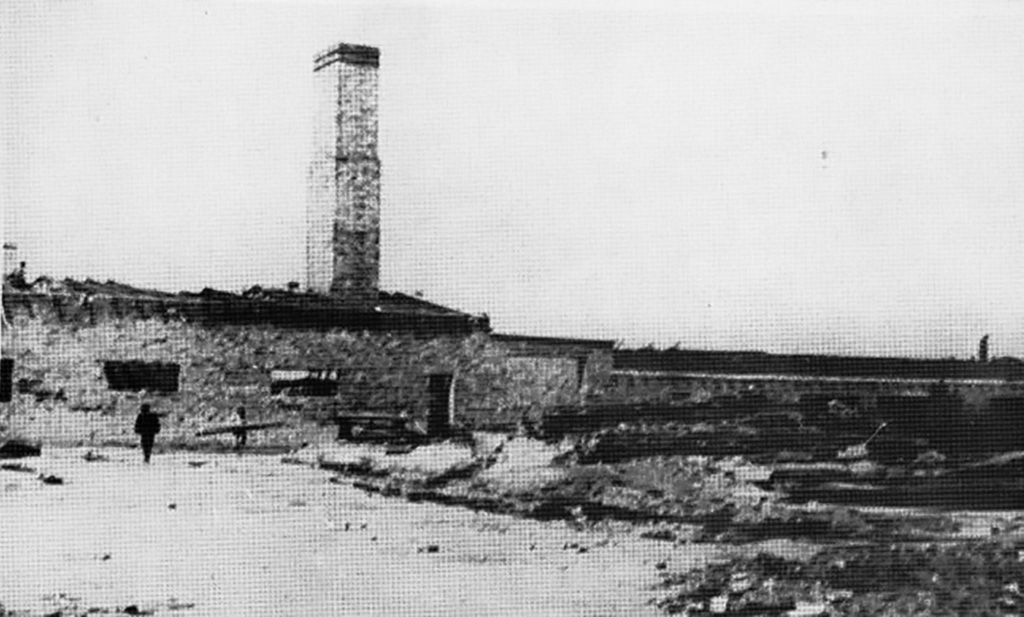
The investigation into war crimes committed at the little known (at first) KL Warschau was initiated by the Institute of National Remembrance in 1973 under Gierek. The very next year Trzcińska (43) joined the department specifically to investigate the street executions in Warsaw. Meanwhile, the investigation into a possible death camp at KL Warschau by the IPN was closed after 3 years; it was reopened in 1982 following the military crackdown on Solidarity and again in 2002.[7] Apparently the venerable scandal had legs. No one at IPN works alone, but research by Trzcińska brings to mind the early days of the Soviet Extraordinary State Commission once proclaiming that 3 million people had been gassed at Treblinka, not the 870,000 Jews proposed by Yad Vashem in 2010.[8]
Did the estimated 850,000 Varsovians perished in World War II? The number was widely believed to be true already in 1960s. Clearly, the 200,000 casualties in the capital out of 850,000 totals remained unexplained for at least 50 years. In any case, here's where the work by Trzcińska came to the fore: Trzcińska decided that the only possible place of mass extermination of such incredible number of Poles from the capital ought to be at least equally incredible... and focused her life's work on the theory of Konzentrationslager Warschau, and the biggest gas chamber, the world has ever seen.[9]
Krzysztof Machocki / Halibutt must have run into the fresh new monograph by Trzcińska before his own new submission from late August 2004. Trzcińska's theory was not discredited until 2007, or three years after his new English article was uploaded. The article in Wikipedia was completely rewritten several times over the years, contrary to the claims from Haaretz that “it was completely rewritten this past August” 2019 exclusively. The timeline offered by Benjakob about the recent discovery of an alleged “hoax” is false. In March 2006, for the first time ever, the camp was described as an ‘extermination camp’ not by Halibutt, but by user Kocoum active in Wikipedia for 6 months only. In the same month an IP user from Kansas (Paven1) said it, like it was: there was no death camp! Paven1 was reverted by user MFago who last edited in 2008, but Paven1 put it back. There was an edit war. In July 2006 user Taw from Poland repeated: there's no evidence of a “gas chamber.” – In November 2006 user HanzoHattori removed the information that the gas chamber in a railway tunnel would have been “highly atypical and inefficient” and took ownership of this entry for a few months in 2007. HanzoHattori included several crematoriums in it. He had been indefinitely blocked in February 2008, but the story began to take on a life of its own. In the following years various users removed the word controversy from the copytext. Halibutt was nowhere to be found – he had nothing to do with this article anymore. Krzysztof Machocki passed away on 31 January 2018 after an illness. In the same year user Buidhe (formerly Catriona) added the Infobox with a grossly inflated number of 400,000 inmates at the camp.
The conspiracy theory by Icewhiz, about the English Wikipedia running a “hoax” for 15 years, includes broader discourses of suspicion in the Haaretz narrative such as editor's character assassinations, fictionalized linkage to unspecified Polish nationalists, and purported cabals quoted directly from the racist Encyclopedia Dramatica. Individuals who believe in conspiracy theories are more likely to engage in conspiratorial actions from behind a mask of anonymity. According to Haaretz, it was “an Israeli editor dubbed Icewhiz, who refuses to be identified by his real name.” Several long-term contributors to Wikipedia reminded Icewhiz repeatedly about the difference between a conspiracy theory and a hoax. A conspiracy theory is a theory of a “moon landing hoax”, but the moon landing is not a conspiracy theory; it is a fact disputed by the conspiracy theory as an alleged hoax. For over 15 years Wikipedia tried to bring facts to light. KL Warschau was not an extermination camp. It is a conspiracy theory exposed first by the Polish historians of the Institute of National Remembrance; not by an editor dubbed Icewhiz, nor anyone else from within Wikipedia.
Notes
[1] Omer Benjakob, “The Fake Nazi Death Camp: Wikipedia's Longest Hoax Exposed.” Haaretz.com, 2019. Internet Archive.
[2] Krzysztof Machocki (Halibutt), KL Warschau, Wikipedia, 2004. See also: User:Icewhiz, banned indefinitely by the Wikimedia Foundation from editing all Wikimedia sites for his nefarious activities.
[3] Institute of National Remembrance, “Informacja o ustaleniach dotyczących Konzentrationslager Warschau”, June 2002, Internet Archive. Also: IPN, “Informacja o śledztwie w sprawie KL Warschau”, May 2003, Internet Archive.
[4] Institute of National Remembrance, May 2003, ibidem. Internet Archive.
[5] Wojciech Materski and Tomasz Szarota, 2009, summary of postwar estimates ranging from 50,000 to 700,000 casualties. More below. Internet Archive.
[6] Foreign Broadcast Information Service, 1976. The cumulative losses among inhabitants of Warsaw in the years 1939-1944 were estimated at 850,000 before IPN research. Google Books.
[7] IPN, ''KL Warschau'' investigation reopened in 1982 and again in 2002. Internet Archive.
[8] Yad Vashem, Exhibitions, 2010. Gassed at Treblinka; estimated 870,000 Polish and foreign Jews. Internet Archive.
[9] Trzcińska's theory was not discredited until 2007. IPN – PDF download.
From selected readings on KL Warschau (English and Polish) online:
[2] Informacja o ustaleniach dotyczących Konzentrationslager Warschau; “15 stycznia 2002 r. śledztwo w sprawie zbrodni ludobójstwa w obozie KL Warschau zostało podjęte na nowo.” - Institute of National Remembrance, June 2002, Wayback: https://web.archive.org/web/20060905000553/http://www.ipn.gov.pl/aktual_2707_klw.html
[3] Informacja o śledztwie w sprawie KL Warschau; “200 tysięcy ludzi, brak dostatecznych przesłanek.” - Institute of National Remembrance, May 2003, Wayback: https://web.archive.org/web/20061022125114/http://www.ipn.gov.pl/sled_klw_090503.html
[4] Treblinka at Yad Vashem, 2010; archived by Wayback: https://web.archive.org/web/20100824080821/https://www.yadvashem.org/yv/en/exhibitions/this_month/resources/treblinka.asp
[5] Review and Herald: Volume 144, Part 1, 1967: “where 850,000 perished”, Google Books: https://books.google.ca/books?id=16nkAAAAMAAJ&focus=searchwithinvolume&q=850%2C000+perished
[6] Foreign Broadcast Information Service, Sep. 1, 1976: “six million Poles lost their lives (over 850,000 in Warsaw)”, Google Books: https://books.google.ca/books?id=uVBXDKYR3M0C&focus=searchwithinvolume&q=850%2C000+in+Warsaw
[7] The Warsaw Uprising: » https://web.archive.org/web/20060406070932/http://www.1944.pl/index.php?a=site_text&id=12129&se_id=12294
» https://en.wikipedia.org/w/index.php?title=Warsaw_Uprising&diff=next&oldid=4072284
» https://en.wikipedia.org/w/index.php?title=Special:Contributions/Halibutt&dir=prev&offset=20040825011943&limit=500&target=Halibutt
[8] Warsaw concentration camp: » https://web.archive.org/web/20191003201543/https://www.haaretz.com/israel-news/.premium.MAGAZINE-the-fake-nazi-death-camp-wikipedia-s-longest-hoax-exposed-1.7942233
» https://web.archive.org/web/20060905000553/http://www.ipn.gov.pl/aktual_2707_klw.html
» https://en.wikipedia.org/w/index.php?title=Warsaw_concentration_camp&oldid=5424595
» https://web.archive.org/web/20060406070932/http://www.1944.pl/index.php?a=site_text&id=12129&se_id=12294
» https://web.archive.org/web/20190501153108/https://www.lrb.co.uk/v41/n09/christian-davies/under-the-railway-line
[9] Michał KurKiewicz, IPN, Zagłada po Zagładzie: Bogusław Kopka, Konzentrationslager Warschau. Historia i następstwa, IPN, Warszawa 2007, ss. 71, PDF: https://ipn.gov.pl/download/1/18182/1-9576.pdf
[10] Anthony M. Tung (excerpts) WARSAW: THE HERITAGE OF WAR, Wayback: https://web.archive.org/web/20060622053127/http://www.anthonymtung.com/excerpts.htm
[11] Referat o KL Warschau pt. "Historyk, polityk, czy smrodziel?" https://kl-warschau.blogspot.com/ Prof. Jan Żaryn debunks the KL Warschau gas chamber theory, Warsaw, 2 Jan 2017. Blogspot.
[12] Nationalist claims made online with excerpt from the PWN encyclopedia: http://www.info-pc.home.pl/whatfor/baza/kl_warschau.htm
[13] User Kocoum. General statistics. Pages edited: https://xtools.wmflabs.org/ec/en.wikipedia.org/Kocoum
[14] London Review of Books, "Under the Railway Line." Christian Davies on the battle for Poland's history: https://www.lrb.co.uk/v41/n09/christian-davies/under-the-railway-line. Vol. 41 No. 9, 9 May 2019, page 29.
[15] Estimates of the number of civilians killed in the capital during the Warsaw Rising '44:
- Roman Goldman (1945) | no less than 50,000
- Rzeczpospolita (1944) | 500,000 to 700,000
- Władysław Gomułka (1945) | 100,000 dead
- Stanisław Podlewski (1947) | 200,000 dead
- Czesław Łuczak (1979) | over 180,000 civilians including 15,000 partisans
- Jerzy Kłoczowski (1988) | 180,000 to 200,000 Poles
- Krzysztof Komorowski (1999) | 100,000 to 150,000 civilians
According to 2009 summary by Wojciech Materski and Tomasz Szarota, POLSKA 1939-1945 (Wayback): https://web.archive.org/web/20120323161233/http://niniwa2.cba.pl/polska_1939_1945.htm the cumulative losses in the Warsaw Uprising in research by Czesław Łuczak comprise over 180,000 civilians including 15,000 partisans. According to Rzeczpospolita (1944) which was also mentioned by Łuczak: 500,000 to 700,000. Internet Archive: https://web.archive.org/web/20120323161233/http://niniwa2.cba.pl/polska_1939_1945.htm According to Jerzy Kłoczowski (Wyborcza), there were 180,000 to 200,000 Poles killed in the Warsaw Uprising: http://wyborcza.pl/1,76842,1601810.html According to Krzysztof Komorowski (Powstanie Warszawskie [in] ''Armia Krajowa. Szkice z dziejów Sil Zbrojnych''..., p. 317) – 100,000 to 150,000 Varsovians died. Roman Goldman, ''Bój Warszawy'', July 1945; claimed no less than 50,000. Stanisław Podlewski, "Dziś i Jutro" – claimed 200,000 killed. See: Armia Krajowa: szkice z dziejów Sił Zbrojnych (Google Books): https://books.google.ca/books?id=oKCAAAAAIAAJ&focus=searchwithinvolume&q=Sternschnuppe